
Education

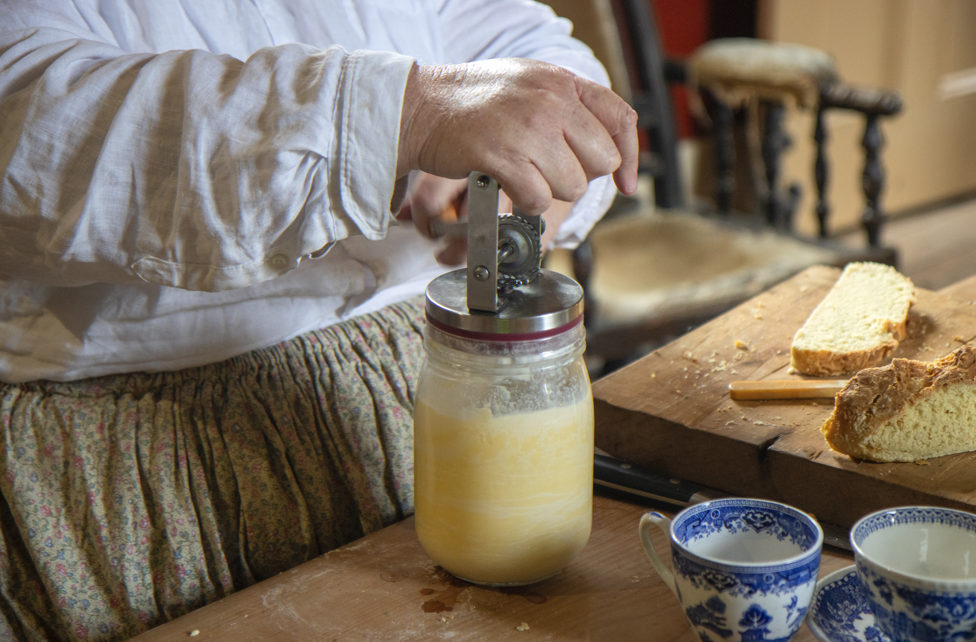
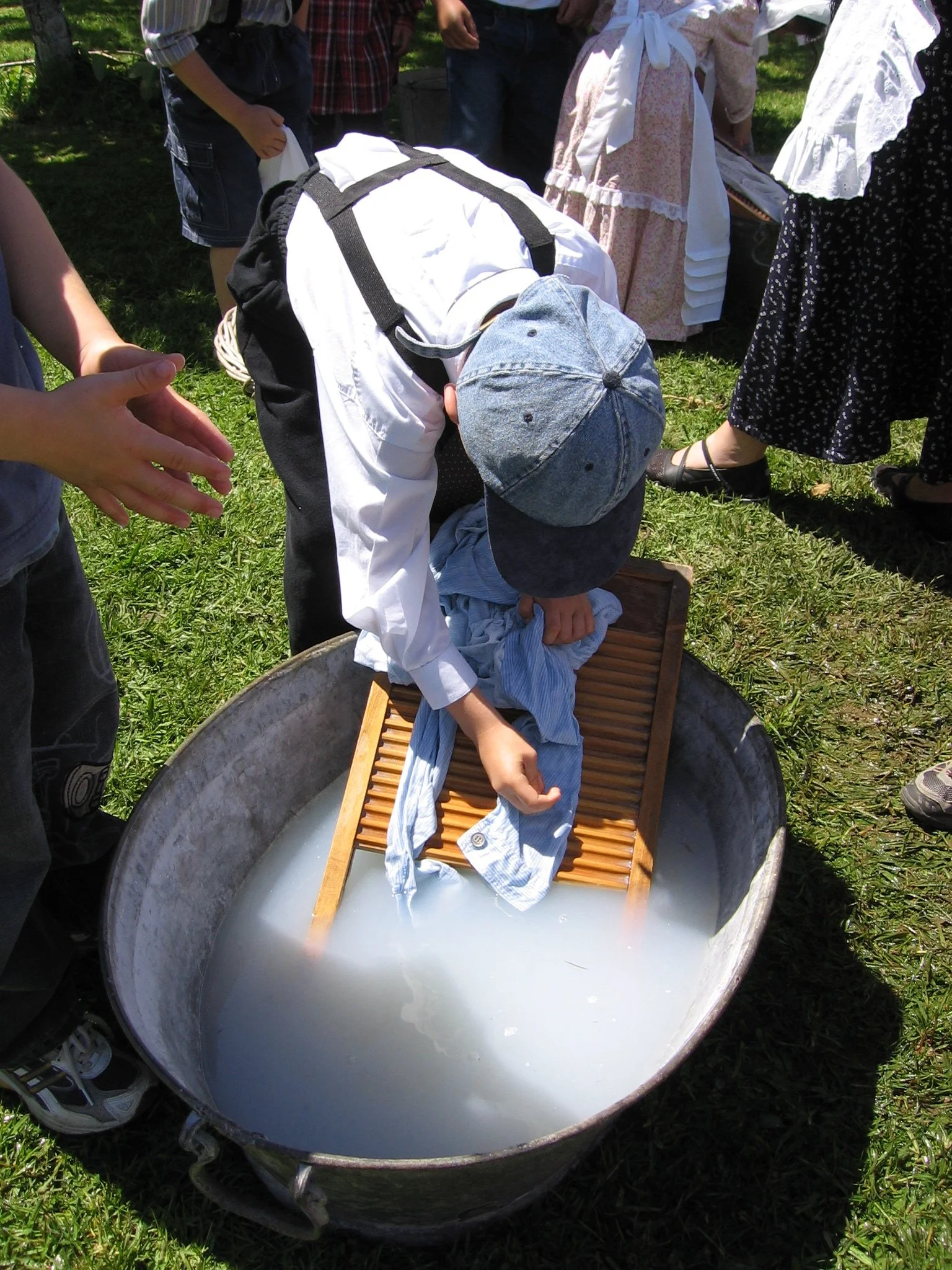
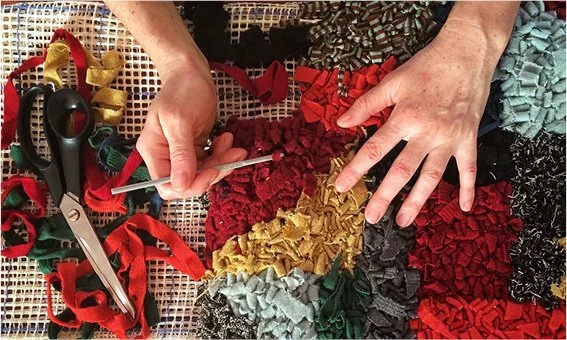
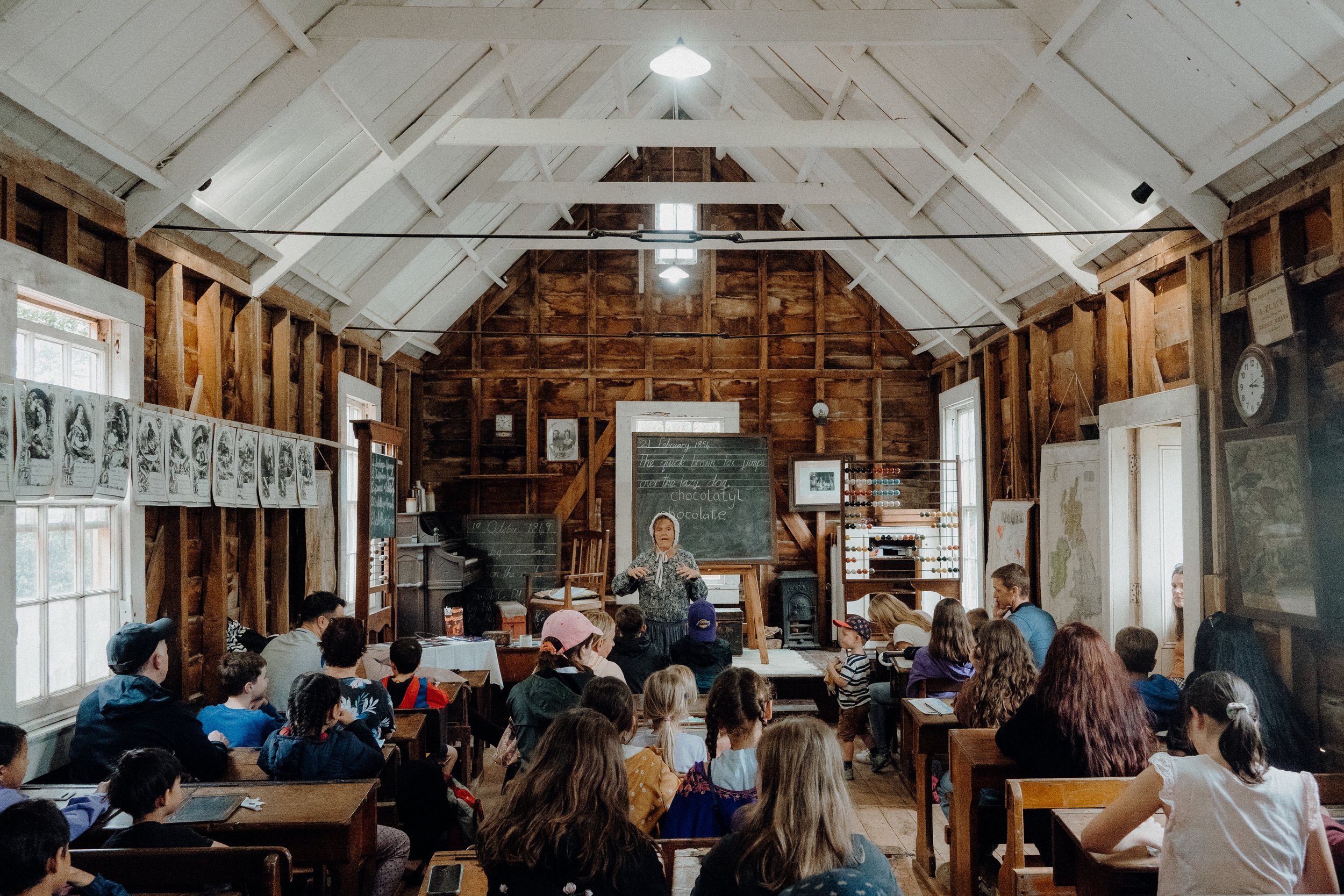
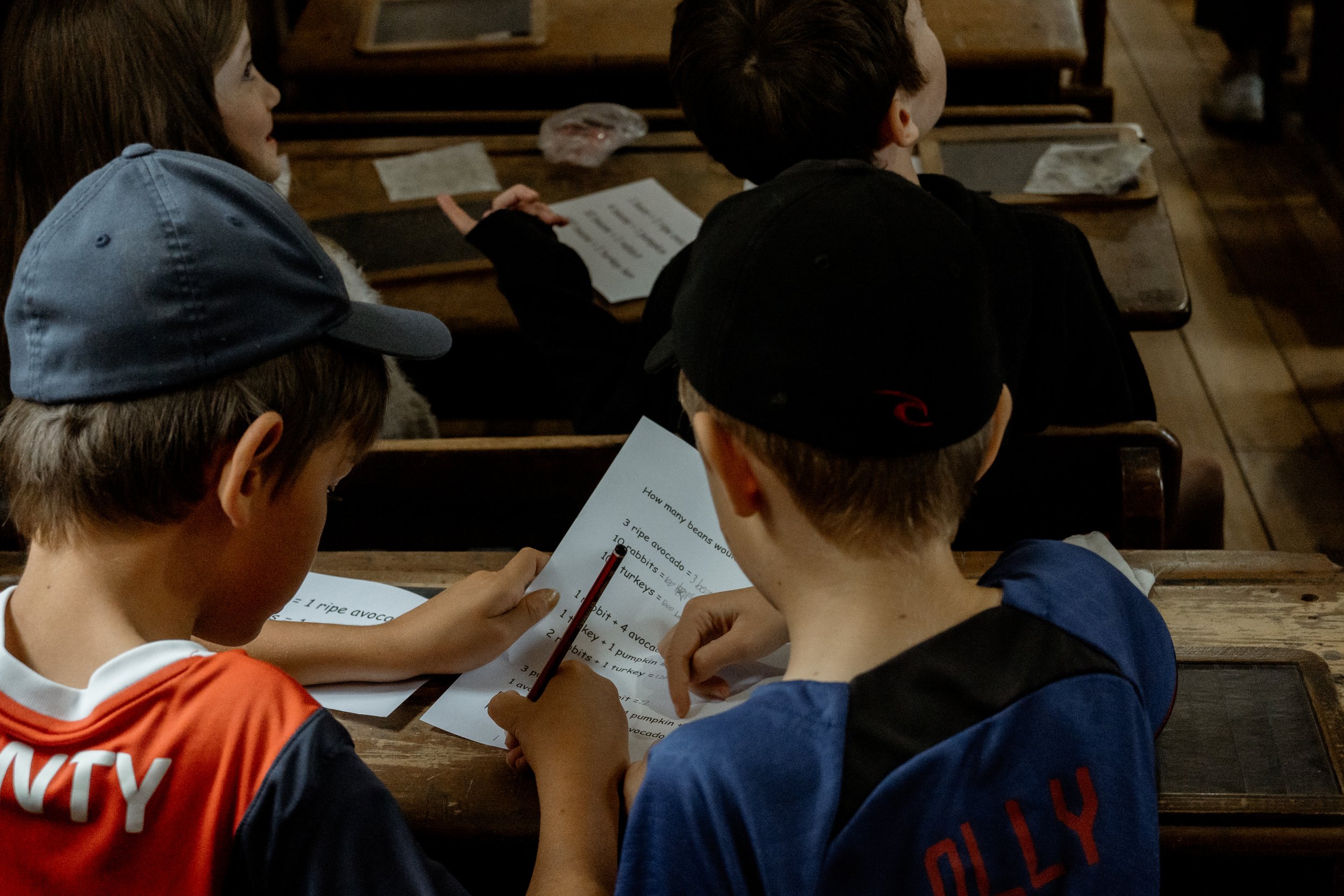
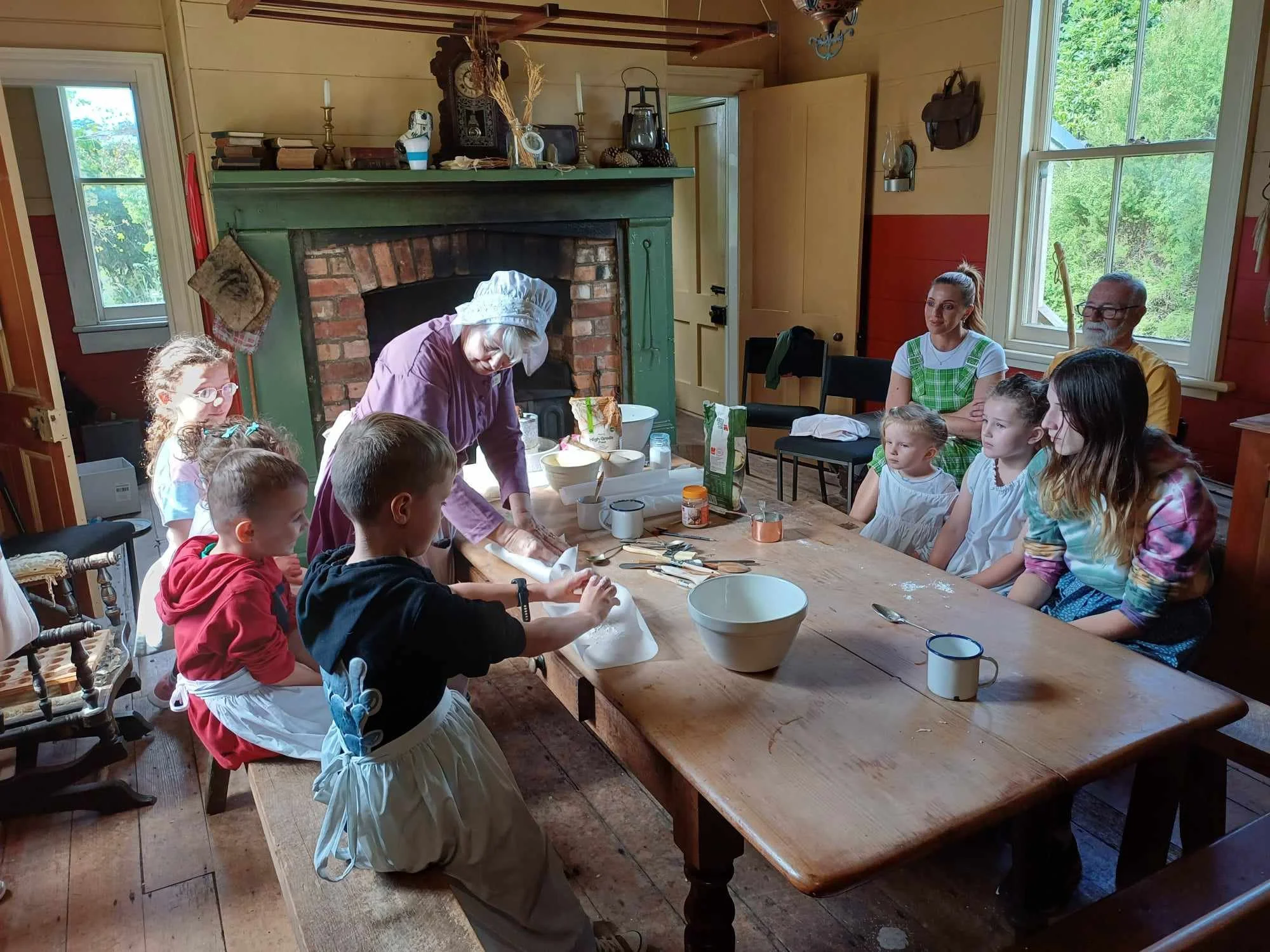
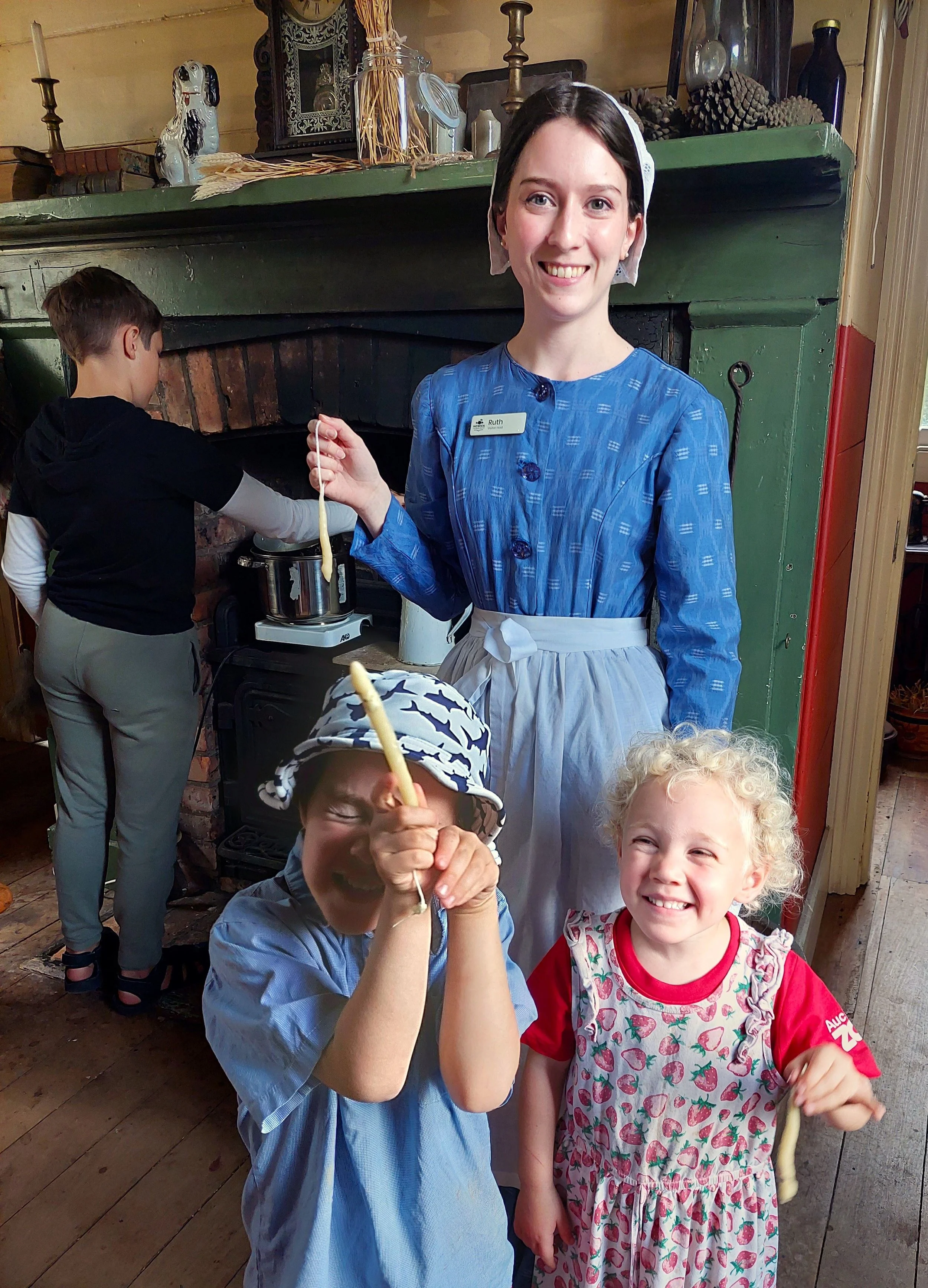
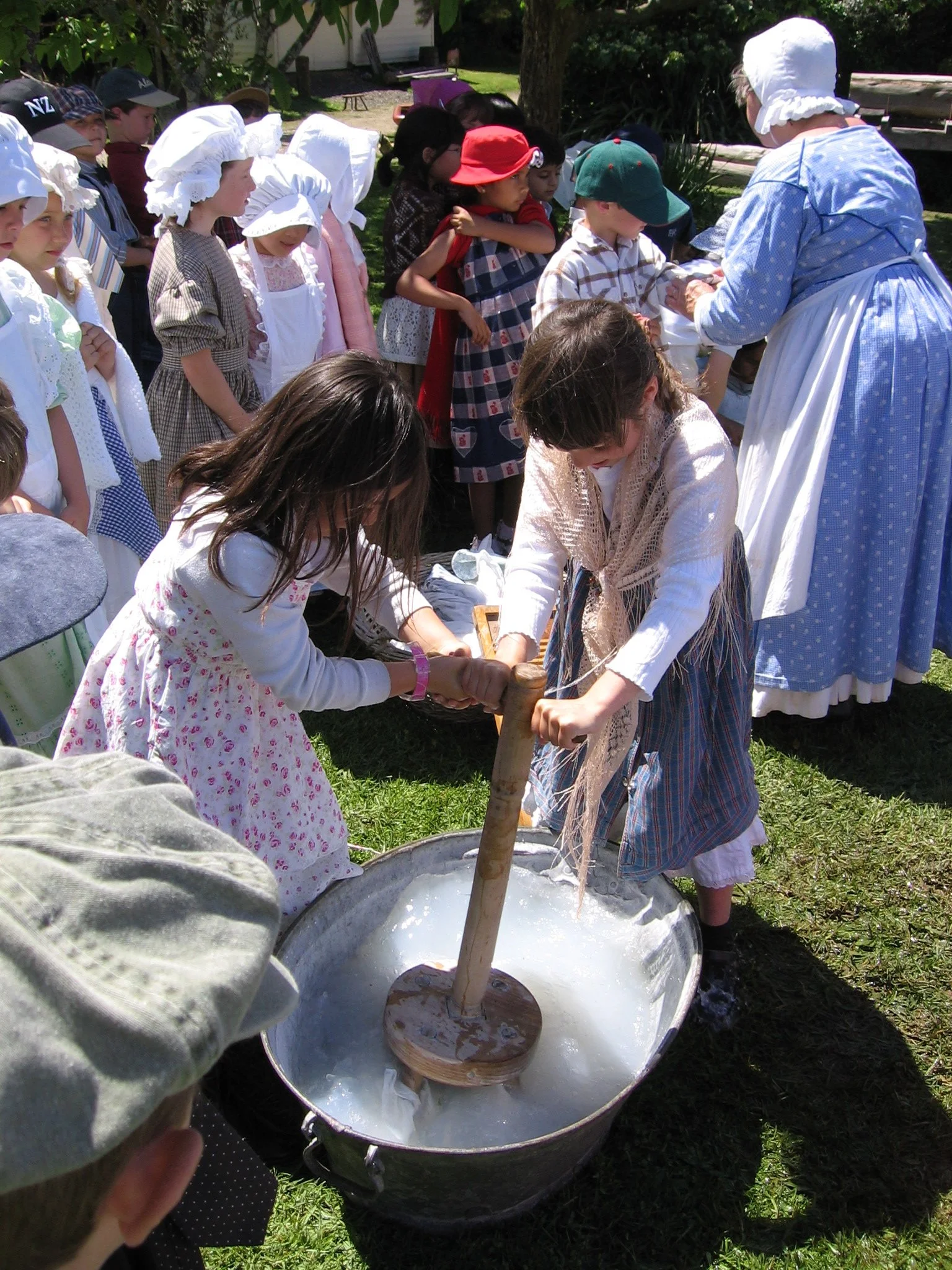
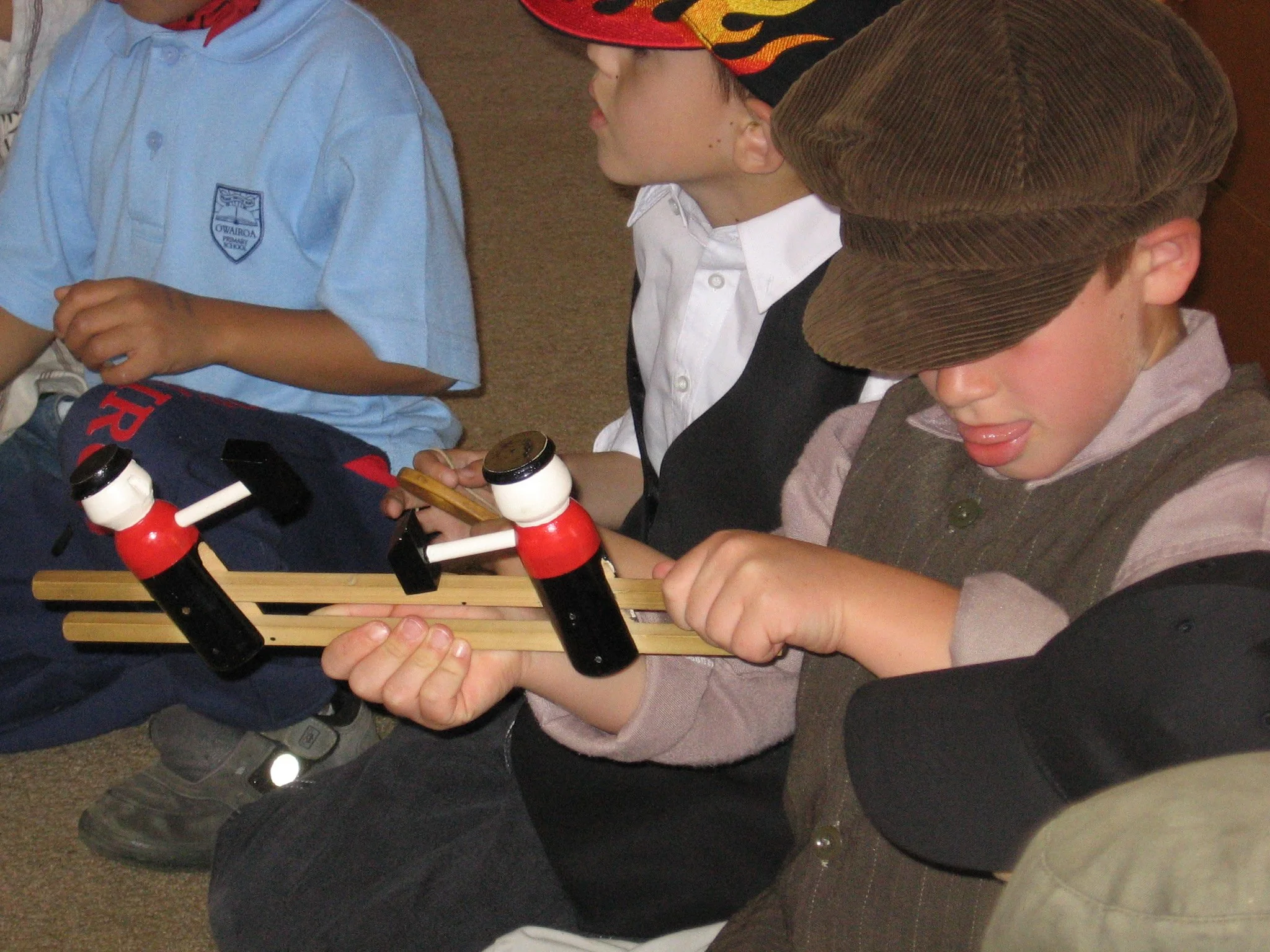
Our education programme is designed to provide hands-on, interactive learning activities that support the New Zealand Curriculum by encouraging students to think critically, creatively, and reflectively.
Frequently Asked Questions
-
Student/child: $12 per person (gst incl)
One free adult per every 6 children/students
Extra adults: $10 per person
Minimum charge of $200 (gst incl) per education session
-
Address: Lloyd Elsmore Park, 75 Bells Road, Pakuranga, Auckland 2010
On arrival, please go to the Education entrance by the ‘Bus Stop’ sign (past the main building towards the rugby club). Parking for buses and visitors is available outside. Your educator will meet you at the gate, if you arrive early, please wait on the bus while we finish setting up.
-
All programmes run Monday to Friday during school term time only.
Half Day: 10:00am – 12:30pm
Full Day: 10:00am – 2:00pm
-
To book your programme follow the instructions on our website to submit an online enquiry
Receive confirmation and your village pack. If you do not receive this within the week, please email education@historicalvillage.org.nz
Book a pre-visit (if required).
One week before your visit, send your completed pre-visit form to us. So that we can confirm your learning goals and final numbers.
Cancellations:
All bookings will incur an administrative fee of $100 if a cancellation notice is given less than five working days before the visit date. If the booking is postponed within five working days of the original booked date for another date within the same school term then the cancellation charge will not apply.
-
Half Day Programme:
Morning tea onsite and health & safety briefing with Village introduction
Two 30-minute activities
Self-guided tour
Full Day Programme:
Morning tea and lunch onsite, plus health & safety briefing with Village introduction
Three 45-minute activities
Self-guided tour
Please note that the Village does not provide morning tea or lunch for your group.
-
Due to space limitations within some programme buildings, visits require a minimum of 20 students and can accommodate up to a maximum of 80 students.
-
Sessions are structured depending on the number of students and activity choices. We work with 30 students to one educator. Each session will include the following:
10am - Welcome, orientation & morning tea
3 Educator-led sessions, each 30-45 minutes with varying activities
Lunch
Self-guided tour of the museum, students can explore inside all the buildings
2pm - Depart Howick Historical Village
-
Howick Historical Village is mainly an outdoor experience. It may rain, so make sure you have your rain jacket and in the summer ensure you have sunscreen and sun hats.
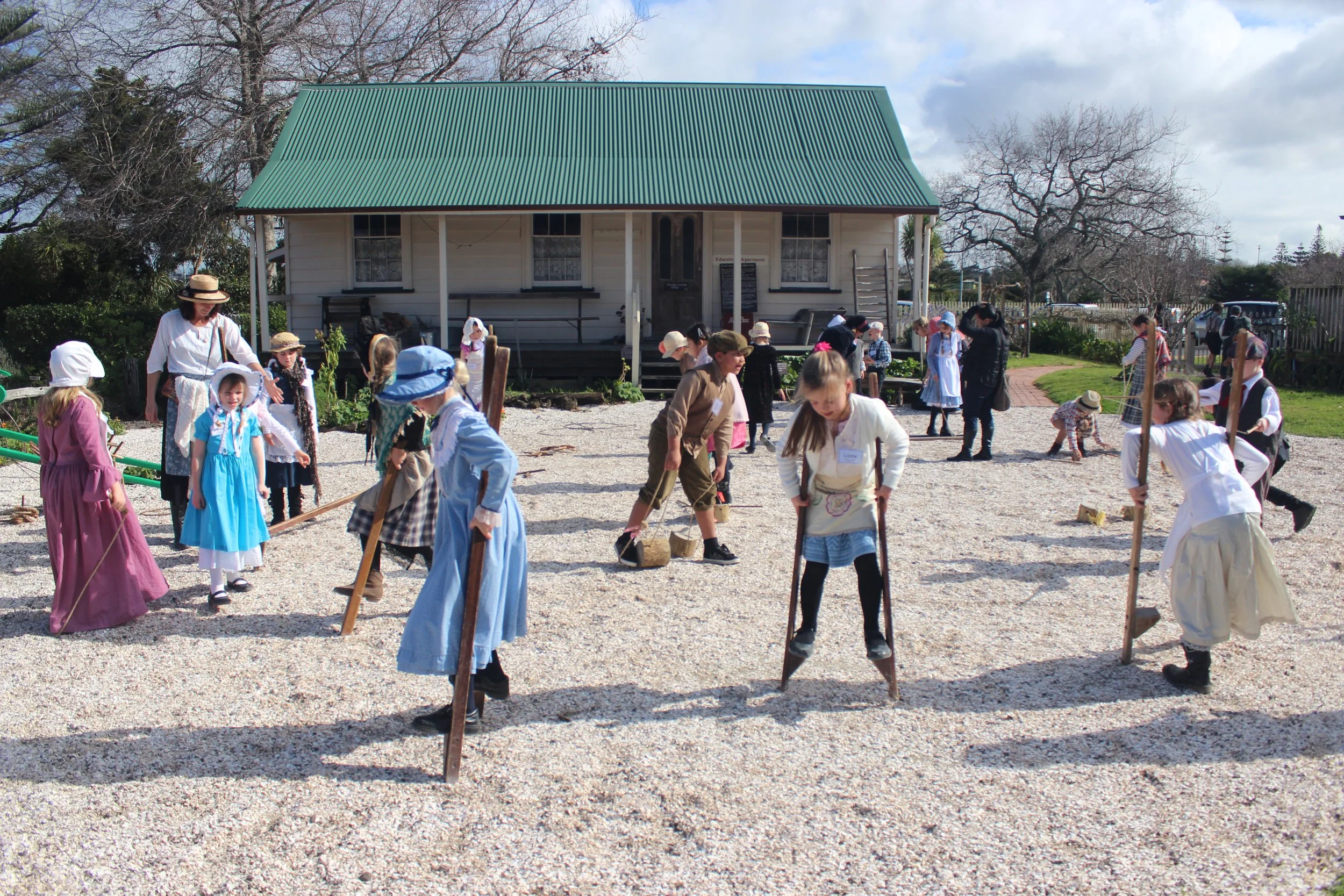
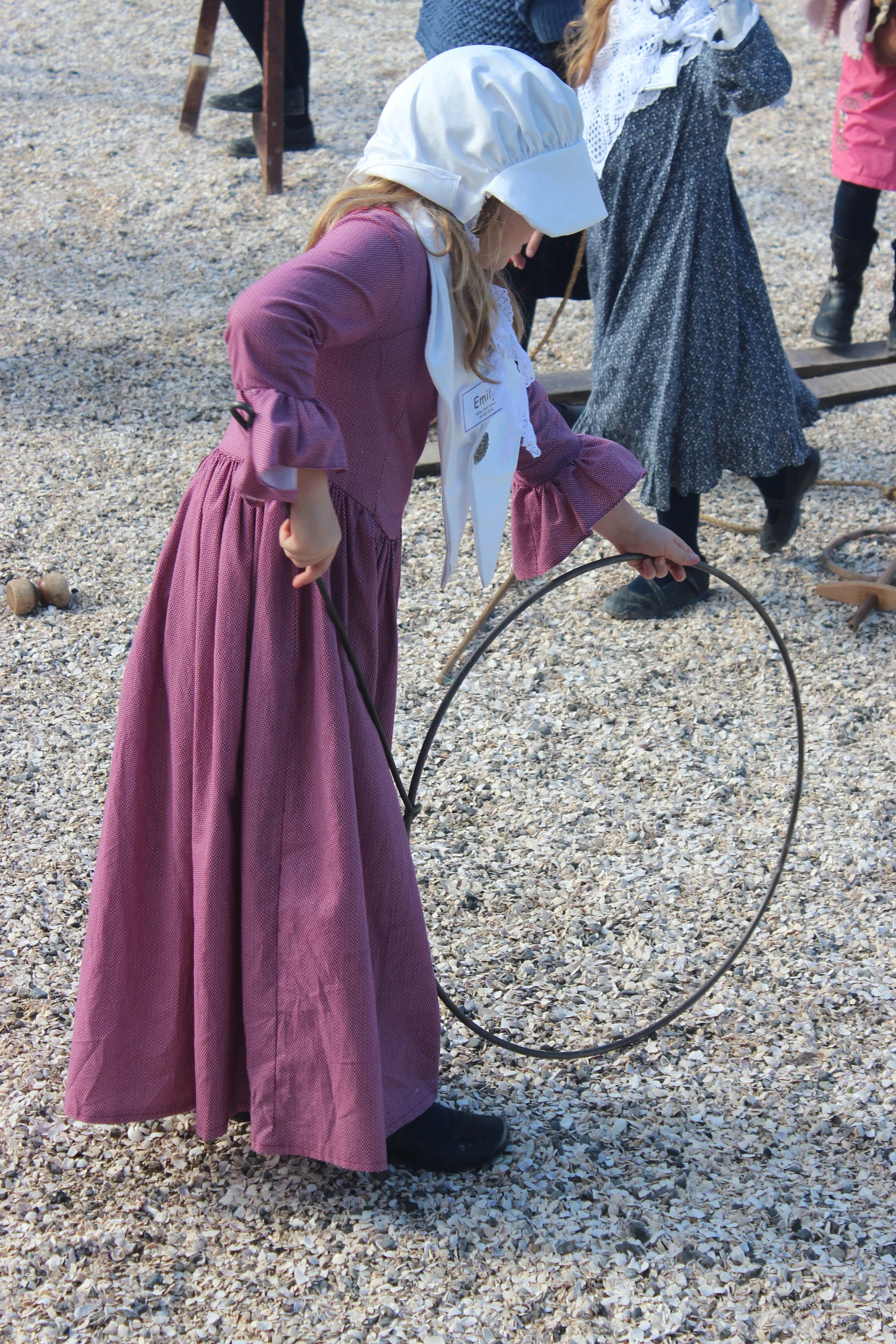
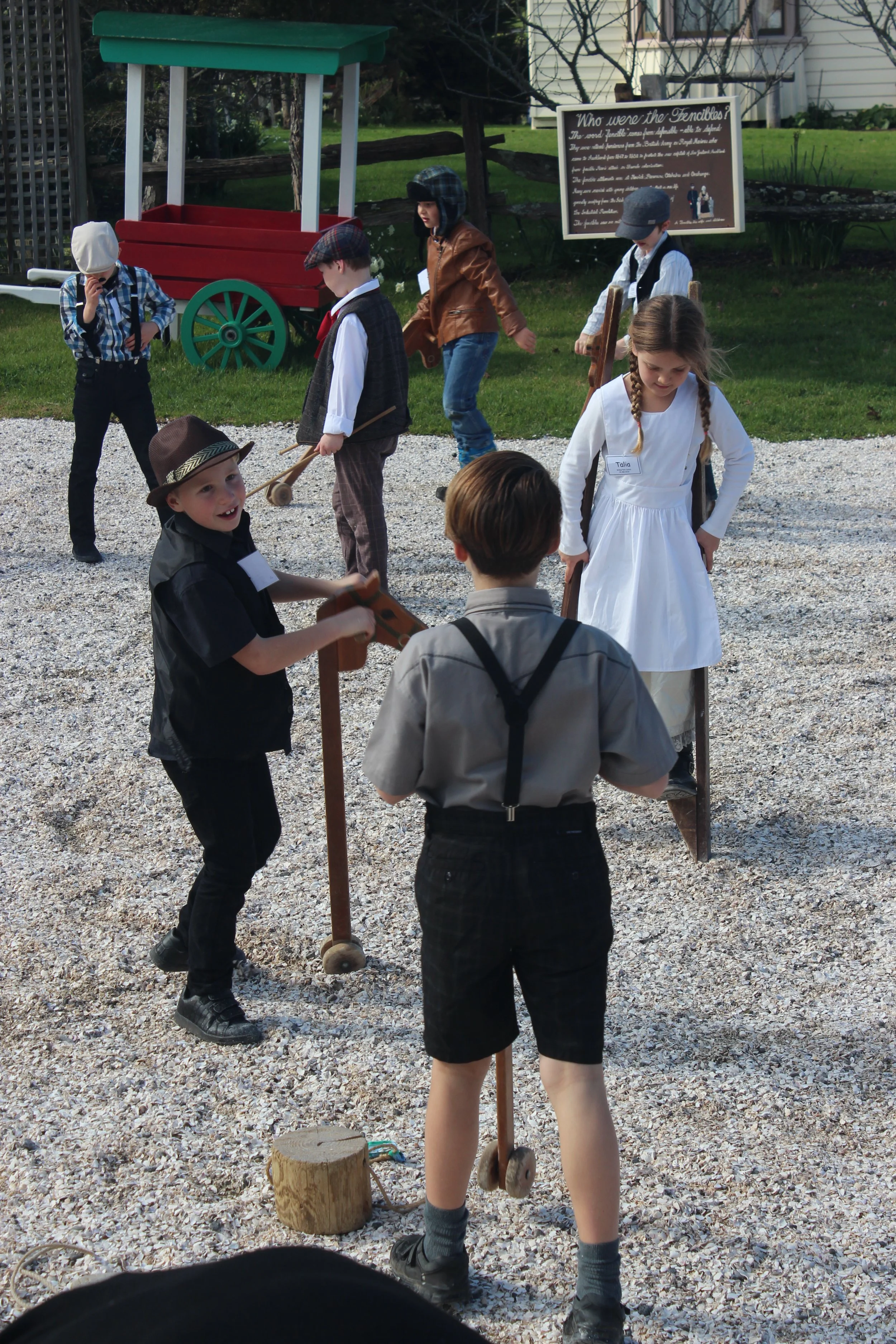
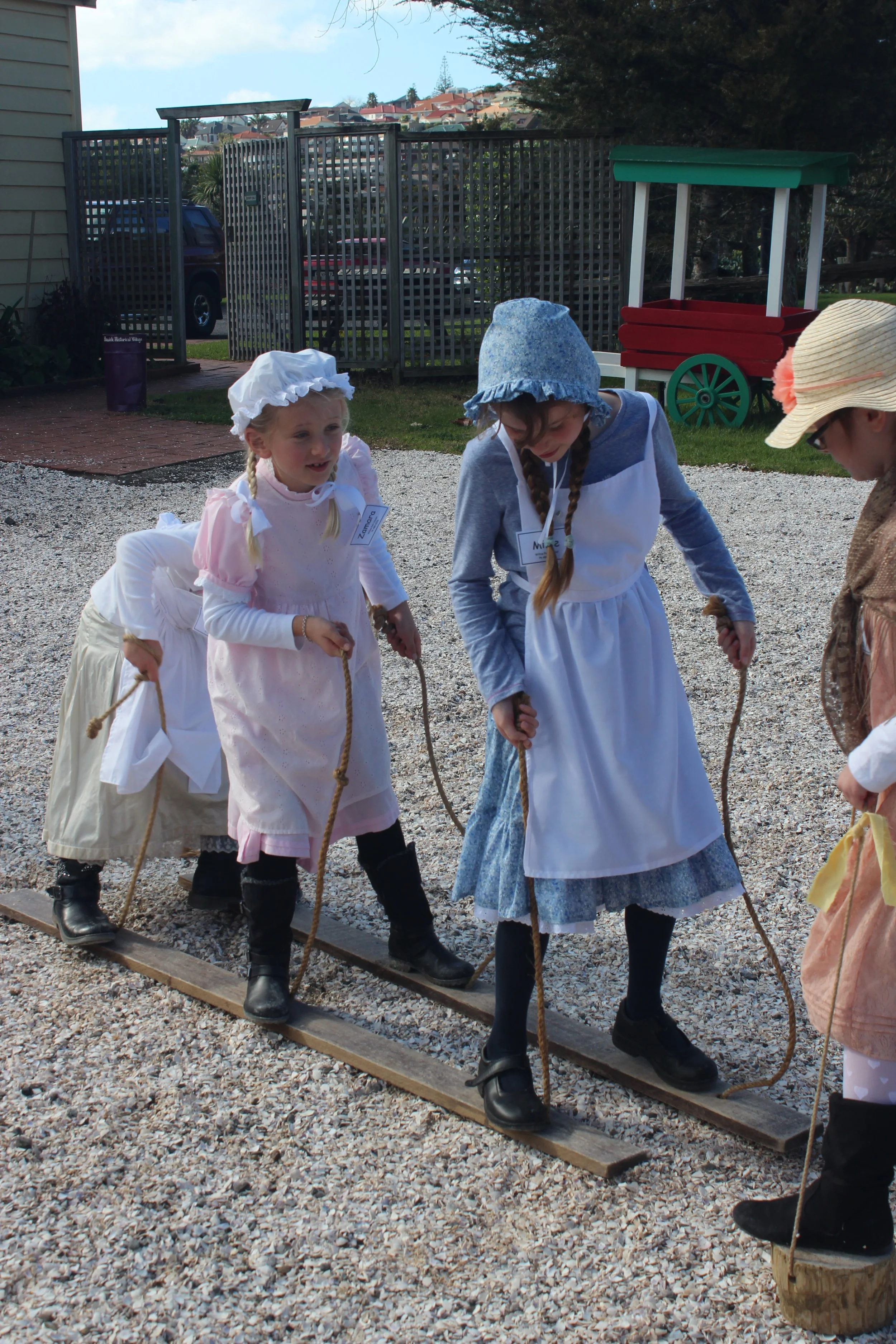
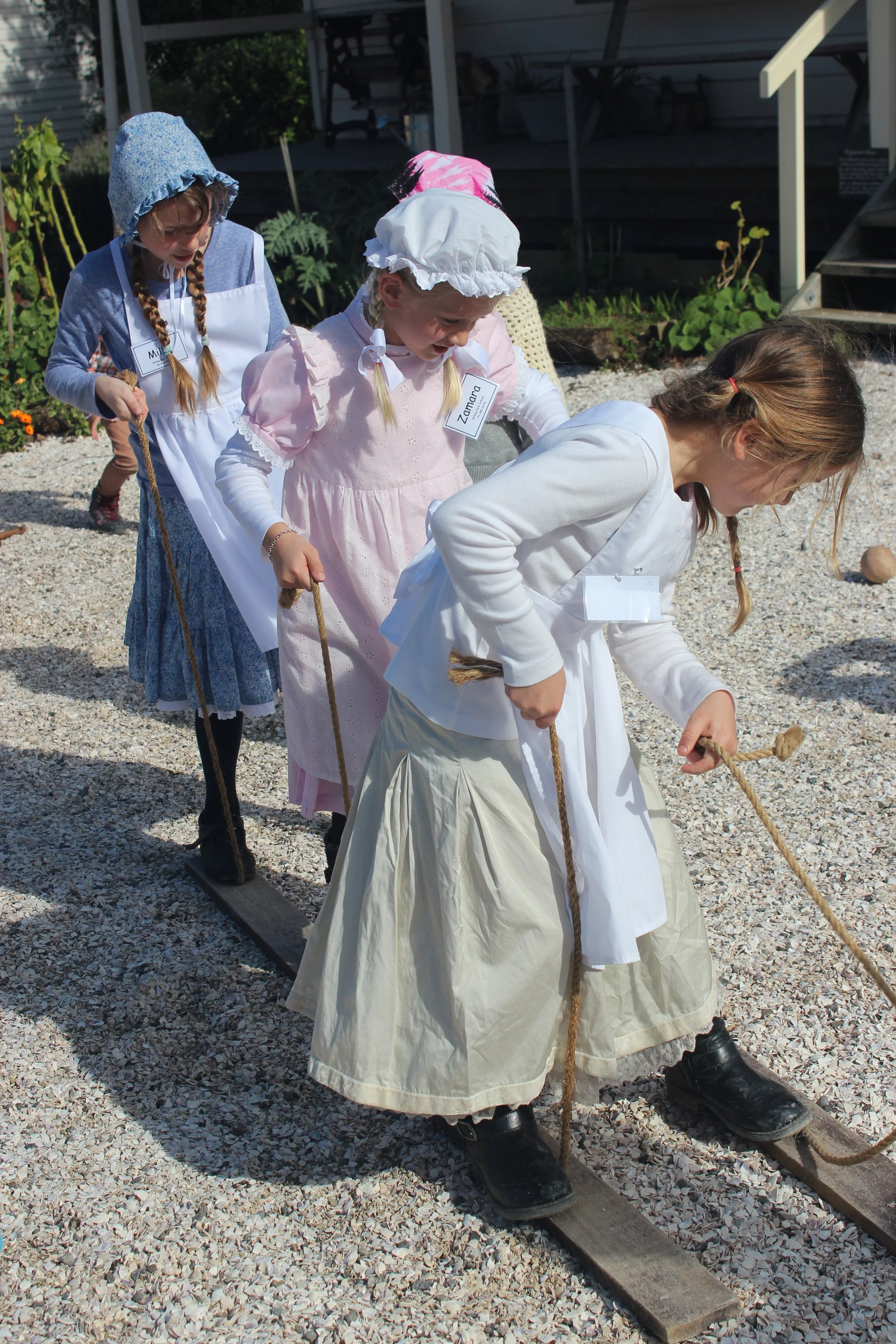
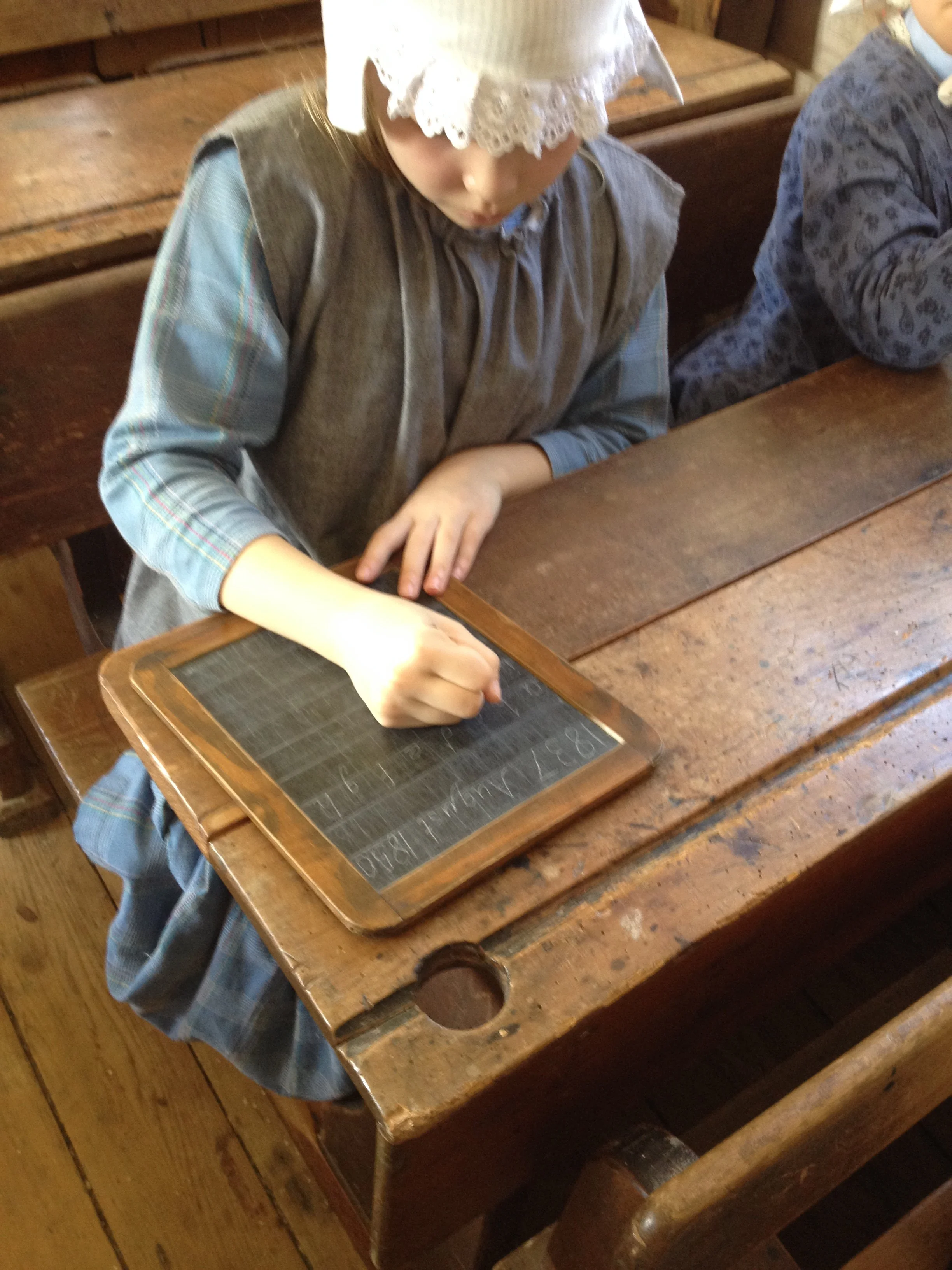
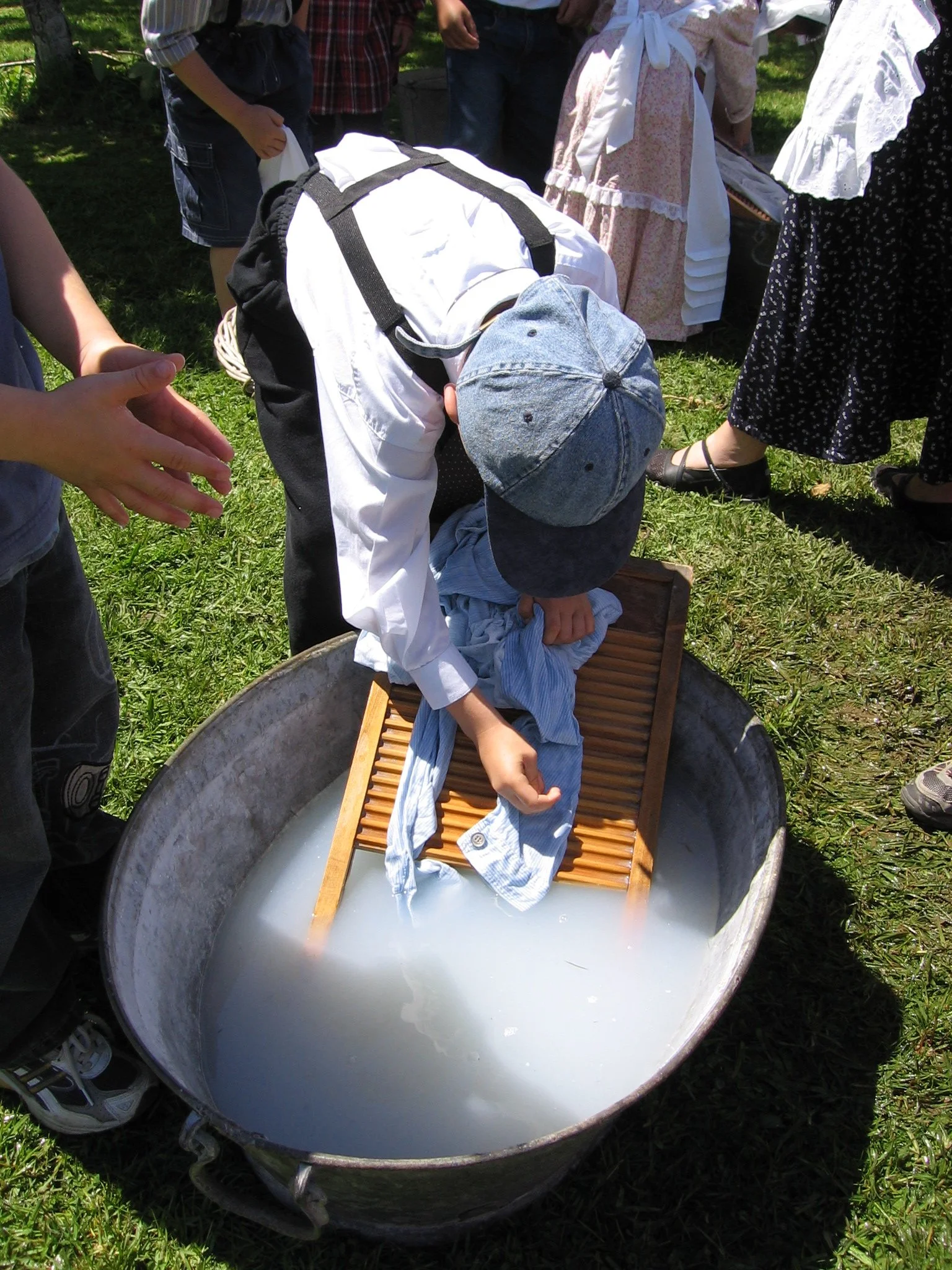
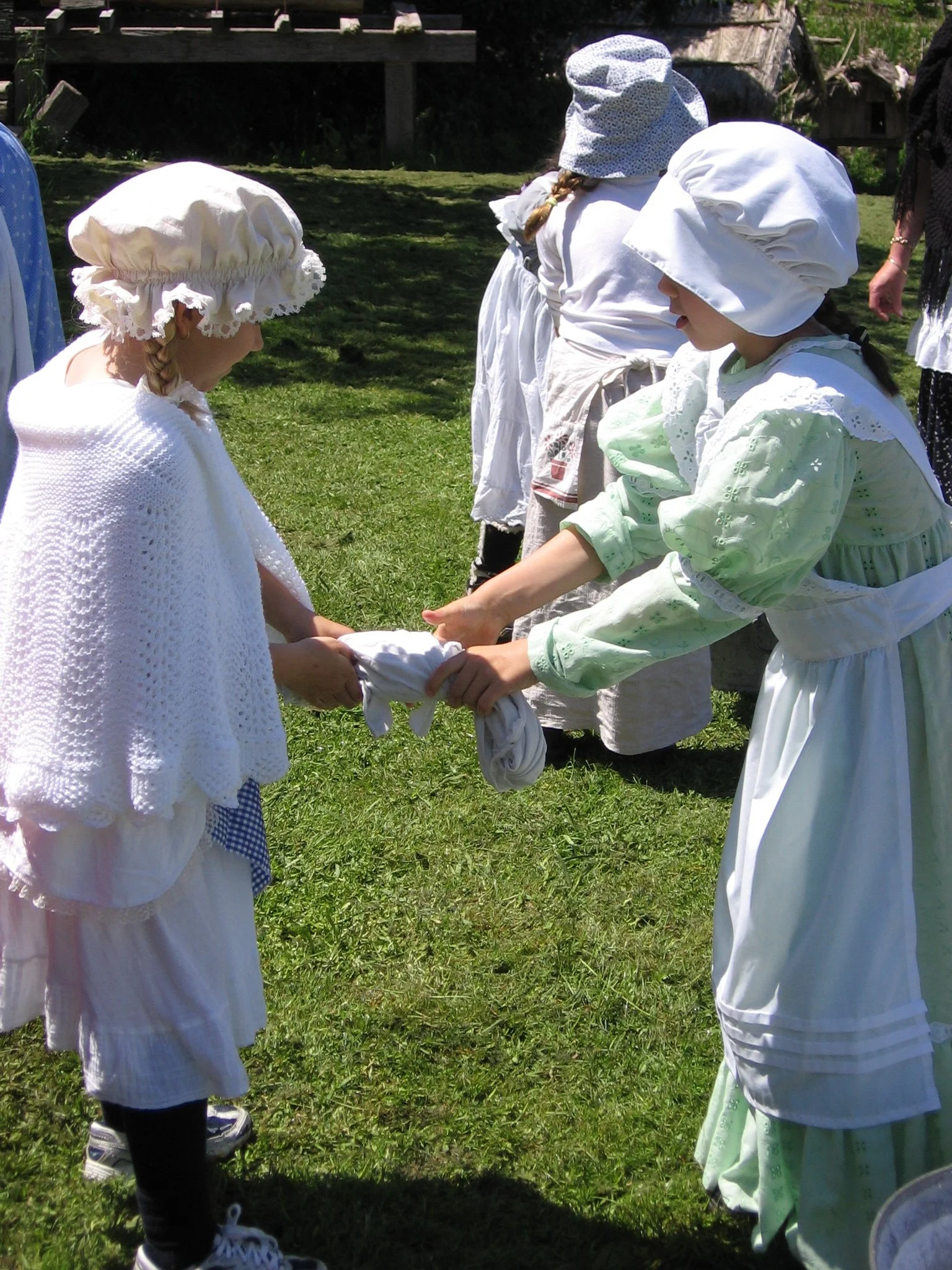
We encourage children and adults to come dressed for the 1840-1860 period, this can be achieved by adapting clothing already found at home. Some ideas include:
BOYS: Boys wore long trousers (jeans, corduroy, cotton drill) with optional braces and long-sleeved shirts with a scarf or floppy bow tie at the neck. Shirts were tucked in or worn over trousers with a belt. Optional waistcoat or jacket. Boots or lace-up shoes. Cap.
GIRLS: Girls wore dresses at mid-calf length, not full-length. (A skirt and blouse give a similarly authentic look). Optional petticoat and pantalets. Optional apron or pinafore. Stockings or long socks. Boots or shoes. Cape or shawl, tied at the front or pinned with a non-valuable brooch. Bare head, bonnet or straw hat.
MEN: White shirt with normal collar standing up with a cravat or small scarf tied in a front bow. Leather shoes or boots plus either a suit with a coloured vest, top hat or felt hat. Light-coloured trousers.
WOMEN: Bonnet or straw sunhat, gloves, white stockings, leather shoes or boots. Long full colourful dress (not black), or a long full skirt and blouse covered by a large shawl.
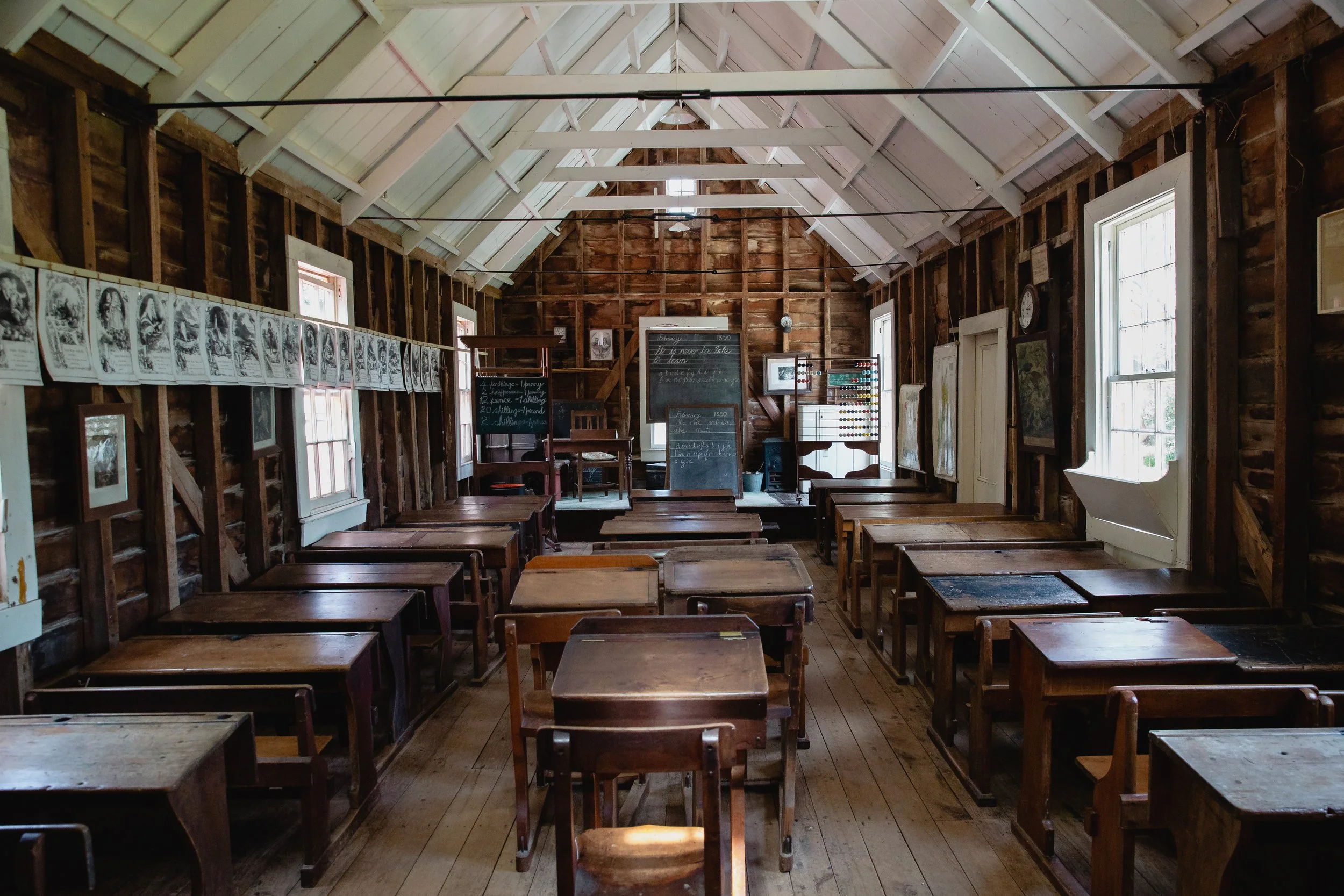
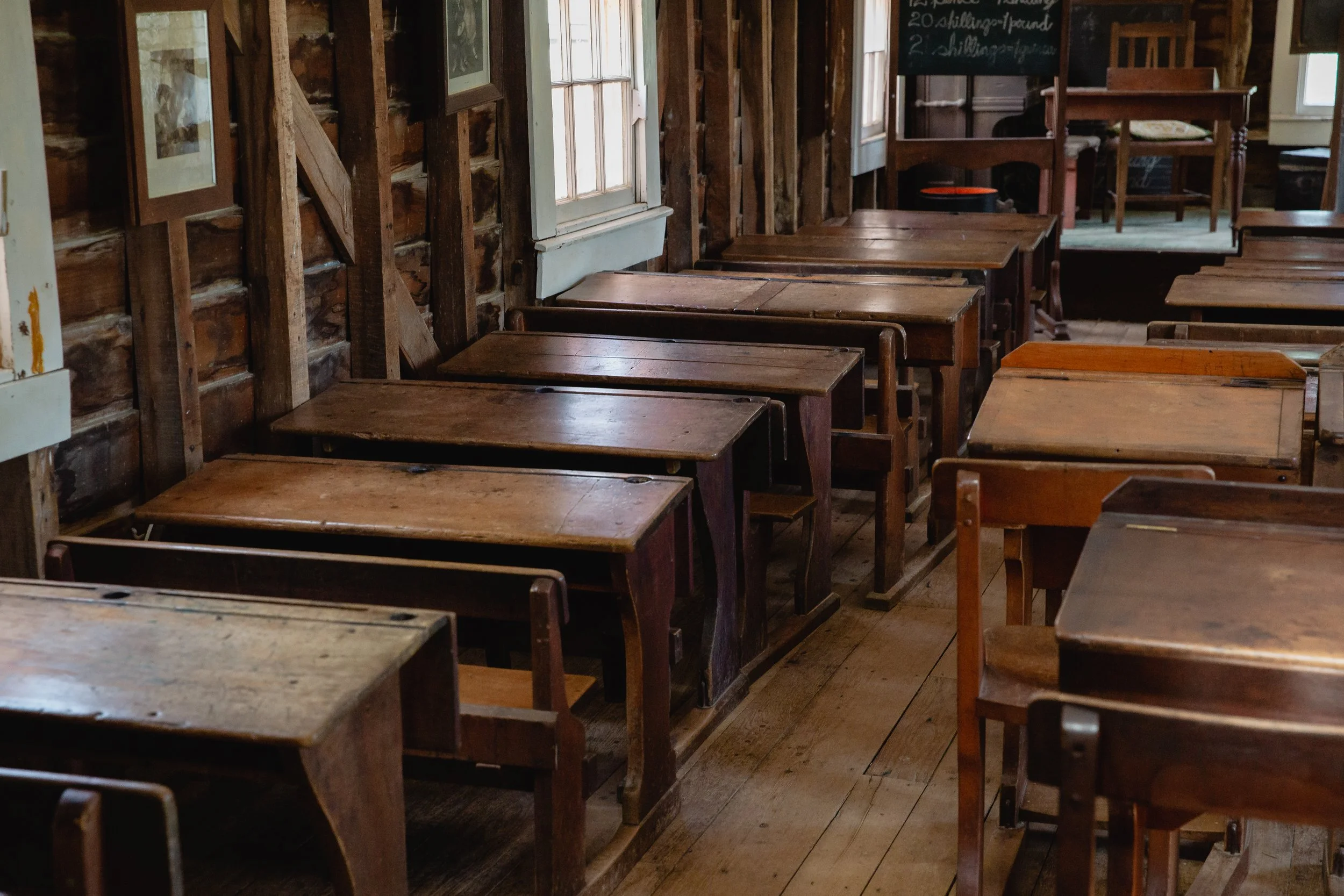
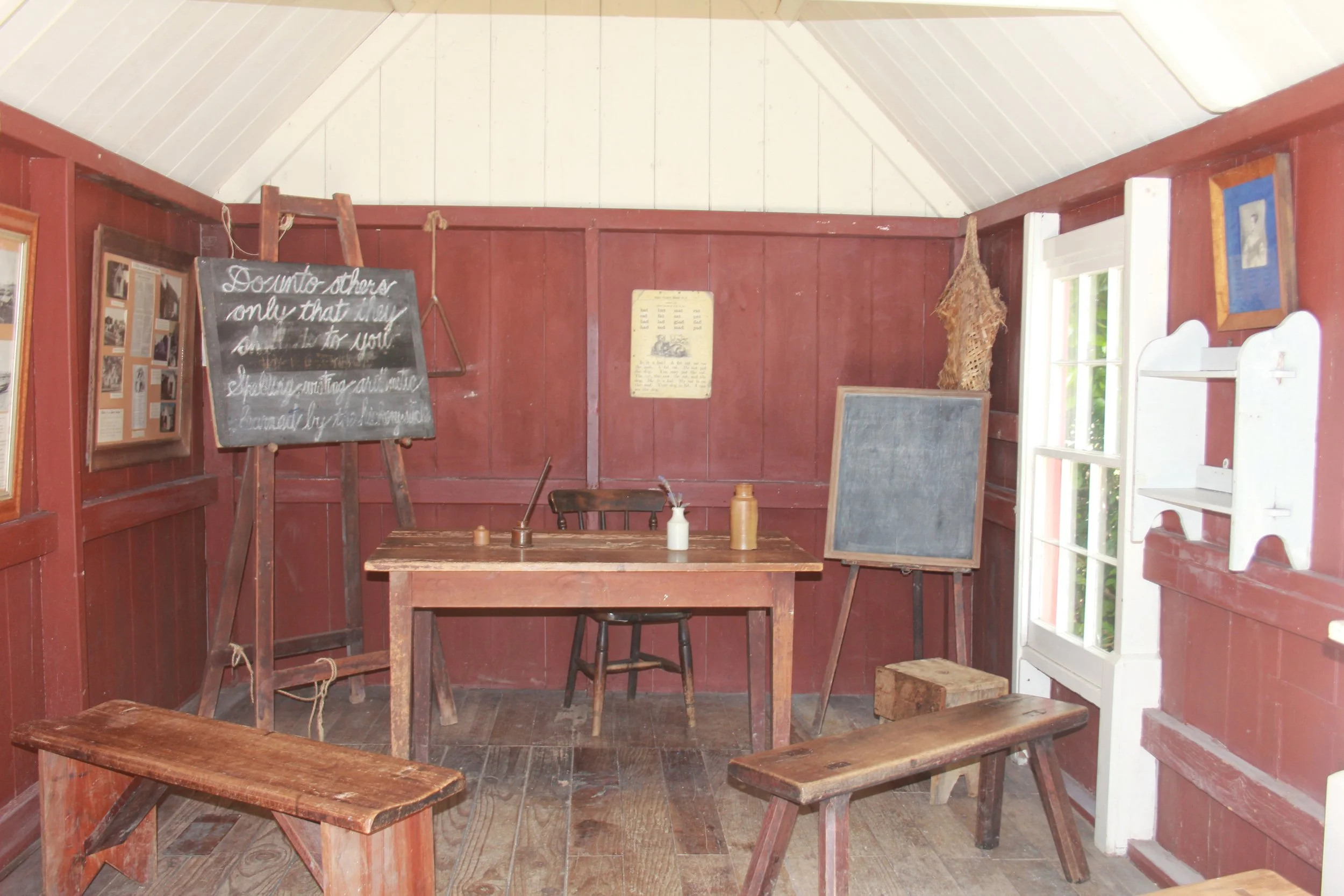
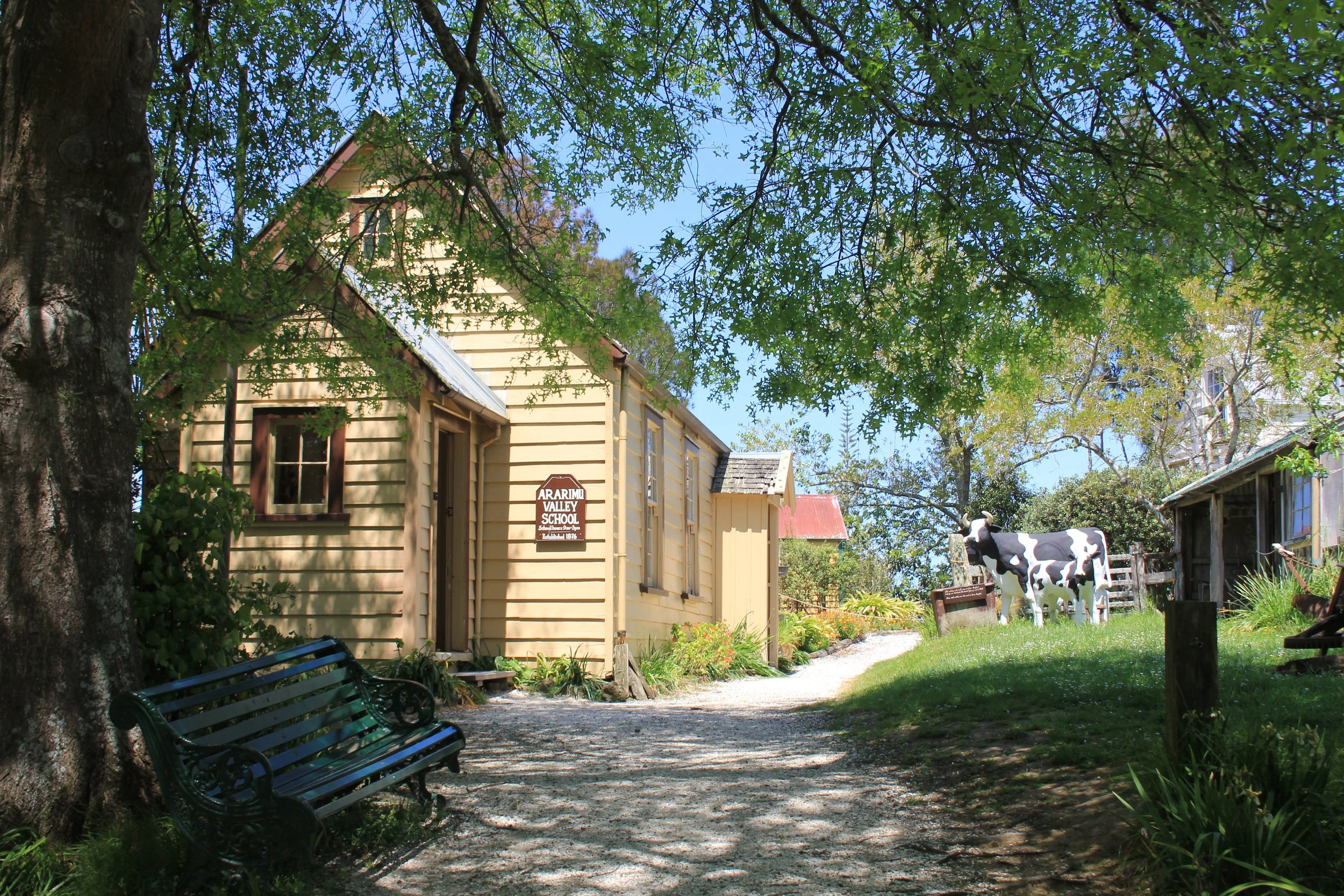
Our Education Directives
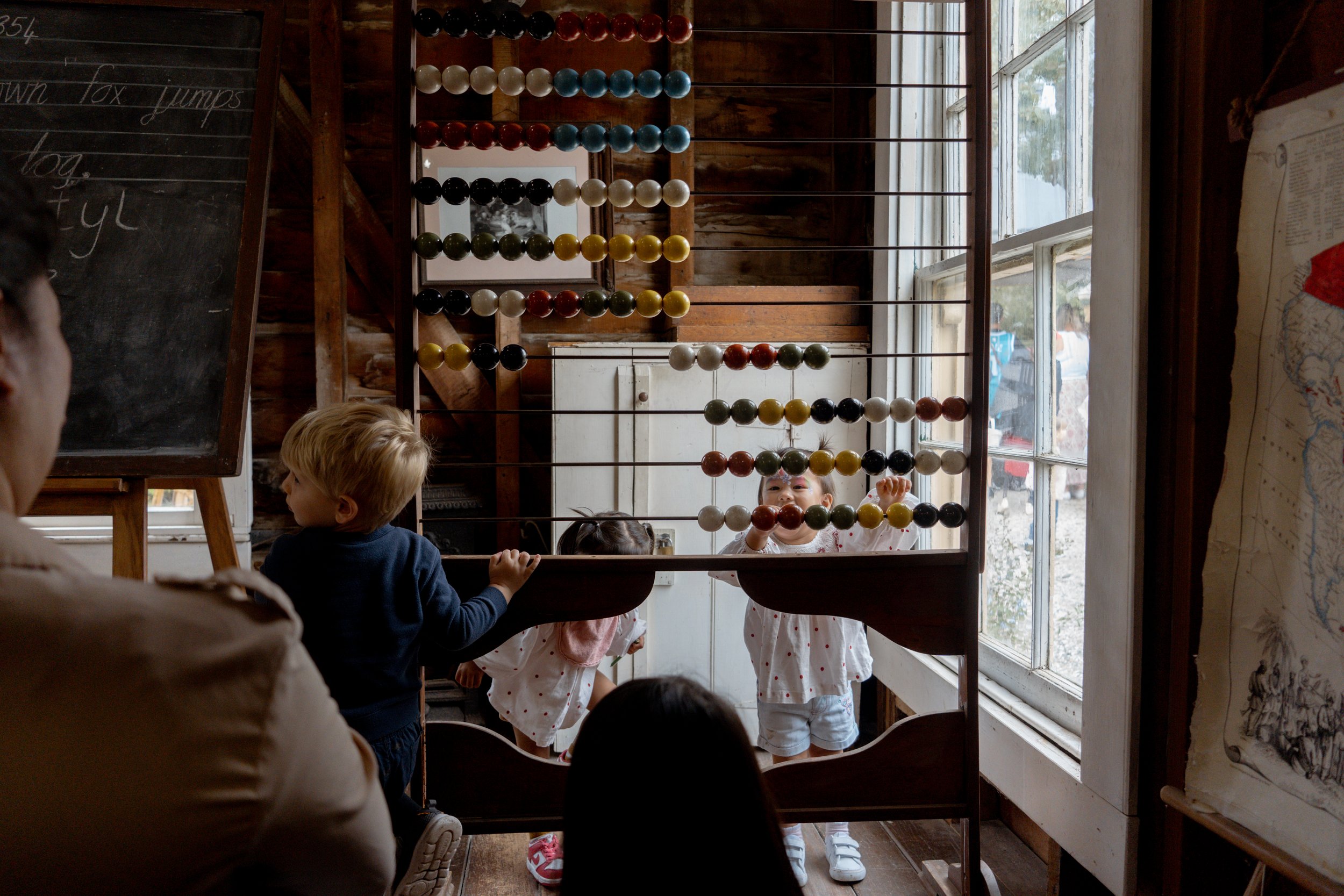
To inspire conversation, expand understanding and create meaningful connections through immersive play & exploration.
To develop programs that explore and give voice to cultural narratives within our diverse community.
To encourage students through the preservation & interpretation of historic objects, buildings and stories.
To maintain an environment of respect and inclusion.